It's spooky season, and so I'm contractually obligated to talk about something creepy today - and, since I live in Japan now, why not talk about something that's creepy AND Japanese?
Today I want to talk about a surreal, obscure masterpiece from 1999, created by Sakuba Tomomi in a studio in Tokyo. It's not so much a video game as an experience in my mind, a bizarre plunge into a very frightening and alien landscape, one that's so strange you'd swear you've only seen such imagery in your dreams. The game is Garage: Bad Dream Adventure.
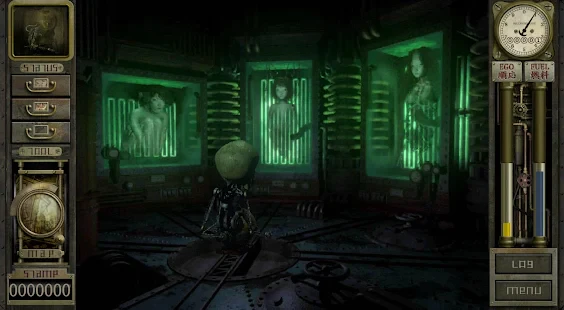
Garage to me encapsulates an atmosphere of horror unique to Japan tha
t I've struggled for a long time to put into words. It evokes images of run-down industry and seedy alleyways; of a place so densely packed and therefore unbelievably suffused with objects and junk both old and new. Garage is an innovator of the esoteric and unique character of Japanese surreal horror. In many ways it's Garage's all-encompassing strangeness that makes it so unusual. The characters in the game - whether they're friendly or hostile - immediately create an emotion of uneasy confusion with their appearance. What exactly am I looking at here? Animal, machine, organic, manufactured...? They disturb on a whole new level because it's so unclear where metal starts and skin ends; it's body horror without the gore.
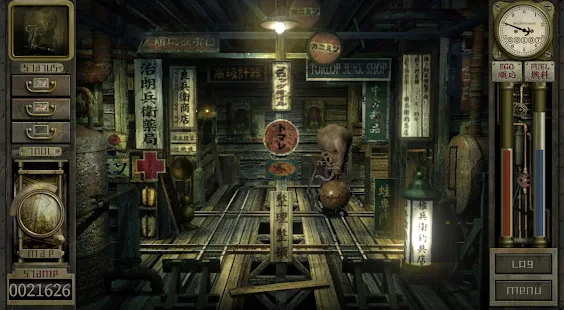
The lighting and atmosphere in the world of Garage creates two very different moods. The network of labyrinthian passages, abandoned homes and damp tunnels are utterly, consumingly dark; the kind of dark that the small lanterns just barely fight off, and that harbors things that don't bear thinking about. On the other hand, the shops and cabin interiors of the seedy entertainment district are drowned in flickering neon lights and plastered in old advertisements. It feels like a time machine to a parallel universe, a nightmare world 1960s Japan. You feel both fascination and nostalgia for a place you've never been and total repulsion - a realm you itch to explore, yet one which you'd never want to find yourself in. With clear inspiration from the works of HR Geiger's biomechanical style, the world of this game feels intensely cold and industrial - there is no human touch, these machines have no spirit behind their hollow eyes.
Oddly, there are segments and areas of Garage which feel oddly comforting, almost like a refuge from the darkest parts of the game. There's an elderly man-robot that you can fish with, and he'll quite happily tell you tales of his fishing trips and give you tips as you dredge the sewage water for frightening aquatic animals. You can sit with him at this relatively comfortable, well-lit and quiet pond for as long as you want; it really does feel like an escape. Moments like these offer a break from the parts of the game where you're certain that something is following you, or the parts where you feel so along that you may well be the only machine in this awful domain. Even a little security must be treasured in Garage.
Garage's soundtrack is one of, if not perhaps its most defining feature. Composed by Tomonori Tanaka, it honestly completes the game - without it, Garage simple ceases to be all that it is. The use of consistent, droning, low notes that barely resemble any kind of conventional music is the only sound that I could imagine this hell world to have. It's the very sound of this place's inhabitants; rattling, machine-like, with a perpetual feeling of unease about it. Each setting in Garage has its own song perfectly suited to what you find there and what to expect. Tracks like "The New World" and "Maruya Department Store" arouse images of dilapidated homes and markets, where dozens of shifty characters gather to do business. Other tracks like "The Cabin" are beautifully ethereal, a surreal journey into a person's dreams. And some, such as "Sickroom" and "Tracks" just feel like a descent into the filthiest depths of hell. At the least, I highly recommend you listen to some of this soundtrack on bandcamp.
The mystery of Garage is intrinsic to the game itself. Nothing is certain, seldom is actually explained. When things are given names and described, they're done so with cryptic phrases like, "Ego Chamber", "The Lighthouse", and "The Sheep's Song". the more you play and explore the abyssal underworld of rotting structures, endless railways and tunnels, silent sewers and looming factories, the more you can piece together what Garage is. Garage is a place, but also an emotion. Who is this machine whose body you take control of? How did you get here? You clearly don't belong here, you're told that multiple times...so where do you belong? You are drip fed this information through prophetic events and from odd characters, and yet you're always yearning for more.
Amongst all else, a part of Garage which really makes it unique, and creates a level of fear and unease so fitting to the game, is its age. Birthed in 1999, Garage is limited in its ability to portray certain things, such as rendered backgrounds and dynamic cutscenes. Obviously the technology of the time was quite limited (although Garage still uses fantastic graphics and shadows for its time), and so many static sprites move much like clockwork puppets, snapping their heads and bodies around quickly; then remaining perfectly still, like a doll, when speaking or sitting. Their bodies possess a smooth, dull quality which gives them the appearance of wax figures, pushing them deeper into the uncanny valley. You're unsure of what this thing would really look like if you saw it in person, it doesn't resemble any kind of creature we're familiar with. Something with a form so unblemished does not exist in this world, it only exists in the machine minds of the decades-old computers that rendered them. This inability of older video games to realistically portray a lifelike or convincing environment actually benefits them greatly in the horror genre; in games such as Silent Hill or Garage, the stiff movements and empty, sterile worlds elevate the discomfort to a level that modern game sometimes fail at.
Currently, Garage: Bad Dream Adventure is a mere $5 on the app store, or $20 on Steam. Its developer, Tomomi Sakuba, spent literal years optimizing, reworking and remastering the game from its very obscure 1999 build to a cleaned-up and easy to play IOS version. Really, go check it out - he remastered the soundtrack, the sound effects, graphics, everything. If you want to not only be scared this October but also morbidly fascinated, like a child discovering a dead crow in his front yard, download and play this game. You will not regret it.
...it will be alright, please trust "Garage".
you are certain to find whatever it is you desire.
Comments
Post a Comment